Assess the Current Condition
The first step in any painting project is a thorough assessment of your current exterior. Look for issues like peeling paint, mold, or signs of damage. Creating a checklist can simplify this process:
- Inspect for cracks or chips in the paint.
- Check for mold and mildew growth.
- Look for any areas that may require repair.
- Identify sections needing power washing.
Gather Your Tools and Materials
Before you begin prepping your home, gather all necessary tools and materials. This list should include, but is not limited to:
Essential Tools
- Pressure washer
- Sanding block or orbital sander
- Scrapers and putty knives
- Paintbrushes and rollers
- Painter’s tape
- Drop cloths
Materials Needed
- Primer and paint (high-quality recommended)
- Caulk and caulking gun
- Wood filler (for wooden surfaces)
- Protective gear (gloves, masks, goggles)
Cleaning the Surface
Preparing your home’s exterior begins with cleaning the surface. A clean surface helps paint adhere better and ensures that dirt and grime don’t affect the finish.
Power Washing
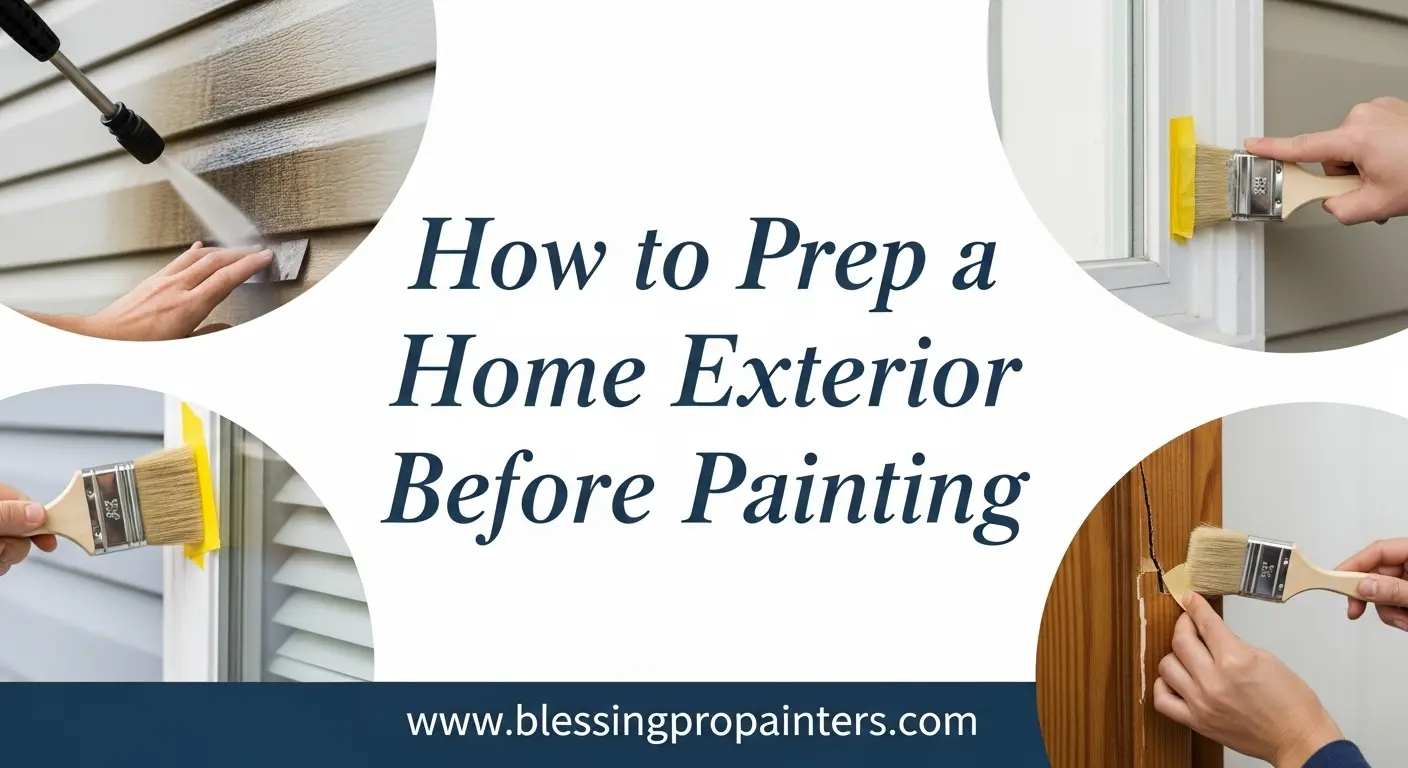
Using a pressure washer is often the most effective way to clean your exterior surfaces, particularly if you have years of grime or mildew. Follow these steps for optimal results:
- Remove any furniture, decorations, or plants near the workspace.
- Use a suitable detergent designed for pressure washing.
- Rinse the surfaces thoroughly, moving from top to bottom.
Hand Cleaning
If a pressure washer isn’t available, you can manually scrub the surfaces using a stiff brush and a bucket of soapy water. Make sure to rinse thoroughly after scrubbing.
Repairing Damages
Once the surface is clean, examine it for damages that require attention before painting. This could be dents, cracks, or even rotting wood.
Common Repairs
Depending on the materials of your home’s exterior, here are a few common repairs you may encounter:
Wooden Surfaces
Inspect for any rotting or damaged wood. Use wood filler to repair small holes and sand the area smooth. Replace severely damaged boards.
Vinyl or Aluminum Siding
Check for cracks or dents. You can patch minor dents with vinyl repair kits, while cracks may need replacement panels.
Sanding and Scraping
After repairs, it’s essential to sand and scrape any remaining loose or peeling paint. This action creates a smooth surface for the new paint to adhere to.
Using a Sander
For larger areas, an orbital sander can save time. While sanding, wear a dust mask to protect your lungs and goggles to shield your eyes from debris.
Scraping Loose Paint
The hand-held scraper is effective for removing loose paint from smaller areas. Be meticulous to ensure the surface is even and clean before proceeding.
Caulking Gaps and Joints
After sanding, inspect all joints and seams where two surfaces meet. Gaps can allow water to seep in, leading to damage over time. Caulking these areas is vital for long-term prevention.
Choosing the Right Caulk
Select a caulk that is weather-resistant and compatible with the materials you’re working with. Silicone-based caulk is ideal for wet areas, while acrylic caulk works well for dry regions.
Priming the Surface
Once all repairs are complete and surfaces are clean, it’s time to apply a primer. Primer helps seal the surface, preventing the underlying material from absorbing too much paint.
How to Apply Primer
Use a roller for larger surfaces and a brush for edges and corners. Make sure to choose a primer that is suitable for the paint you plan to use whether it be oil-based or acrylic.
Final Touches Before Painting
With everything in place, it’s crucial to take a few final steps before applying your topcoat of paint:
Check the Weather
Painting in ideal weather conditions increases the longevity of your paint job. Aim for dry, mild temperatures with low humidity levels.
Protect Surrounding Areas
Use drop cloths to cover plants, patios, or sidewalks adjacent to the paint job. This will prevent splatters and drips from creating extra work.
Safety First
Wear protective gear, including gloves, masks, and goggles, to avoid exposure to paint fumes and dust particles.
When to Call Professionals
Sometimes, the prep work can be overwhelming or perhaps beyond your ability. If this is the case, it may be advisable to contact professionals. At Blessing Pro Painters, we efficiently prepare and paint exteriors in North Wilkesboro and surrounding areas, ensuring your home not only looks good but is protected for years to come.
Conclusion
As you embark on your exterior painting journey, remember that the preparation phase is just as crucial as the painting itself. Properly assessing, cleaning, repairing, and priming will set the stage for a beautiful and long-lasting finish. With care and attention to detail, your home will shine with renewed elegance.
Don’t underestimate the power of preparation—it’s your best ally in achieving the stunning results you desire. And when you’re ready to take on the challenge or simply need professional help, Blessing Pro Painters is here to lend a hand.